 ultimate-guide
How to Start a Bin Store Business: A 2026 Guide
Table of Contents
- What a Bin Store Is and How the Business Model Works
- Where Bin Stores Get Their Inventory: Liquidation Pallets for Bin Stores
- Startup Capital, Warehouse Space, and Location Selection
- Building a Bin Store Business Plan That Actually Works
- Pricing, Price-Drop Schedules, and Bin Store Profit Margins
- Permits, Insurance, and Legal Setup for Your Store
- Daily Operations, Staffing, and Supplier Due Diligence
- Conclusion: Your Launch Timeline and Next Steps
- Frequently Asked Questions
Last Updated: October 13, 2026
What a Bin Store Is and How the Business Model Works
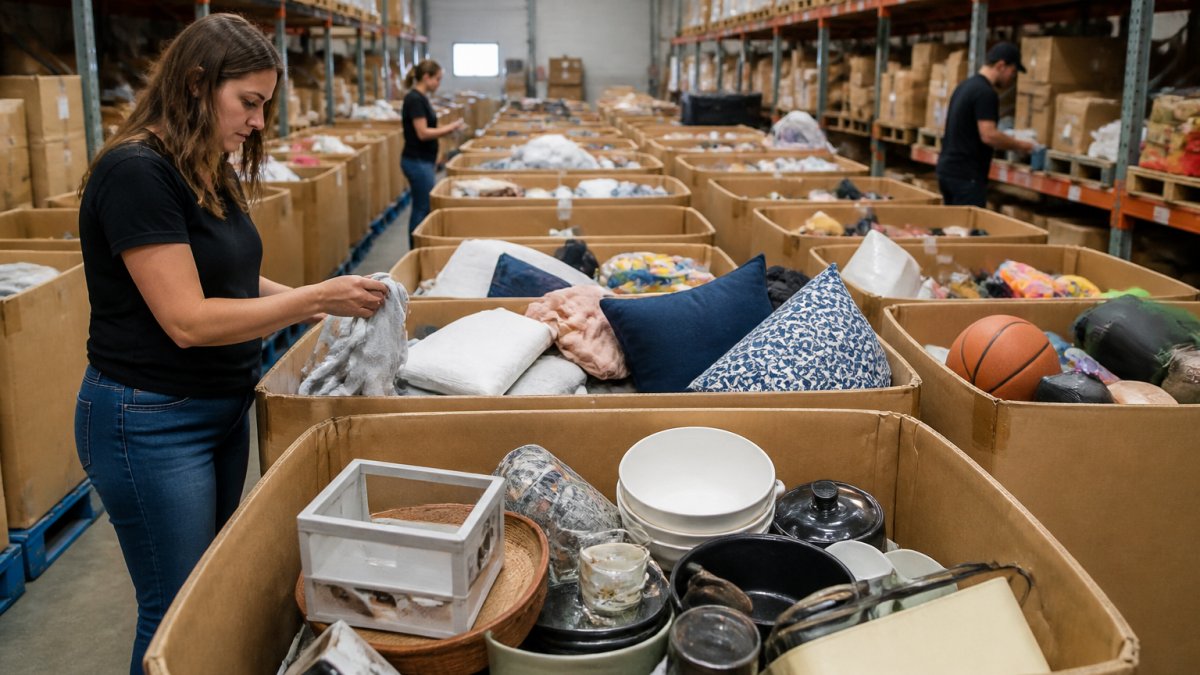
A bin store is a discount retail format where unsold customer returns, overstock, and surplus merchandise from major retailers is sold from large bins at fixed, steadily dropping prices.
This guide from Quicklotz walks through how to start a bin store business from the ground up: sourcing, startup costs, pricing, legal setup, and daily operations.
The model works because the merchandise is cheap and the format is addictive.
Where Bin Stores Get Their Inventory: Liquidation Pallets for Bin Stores
Inventory comes from three channels: retailer customer returns, overstock and surplus merchandise, and shelf-pull or seasonal goods. Most bin stores buy this stock as liquidation pallets or full truckloads from a liquidation company, then sort it in-house before it hits the sales floor.
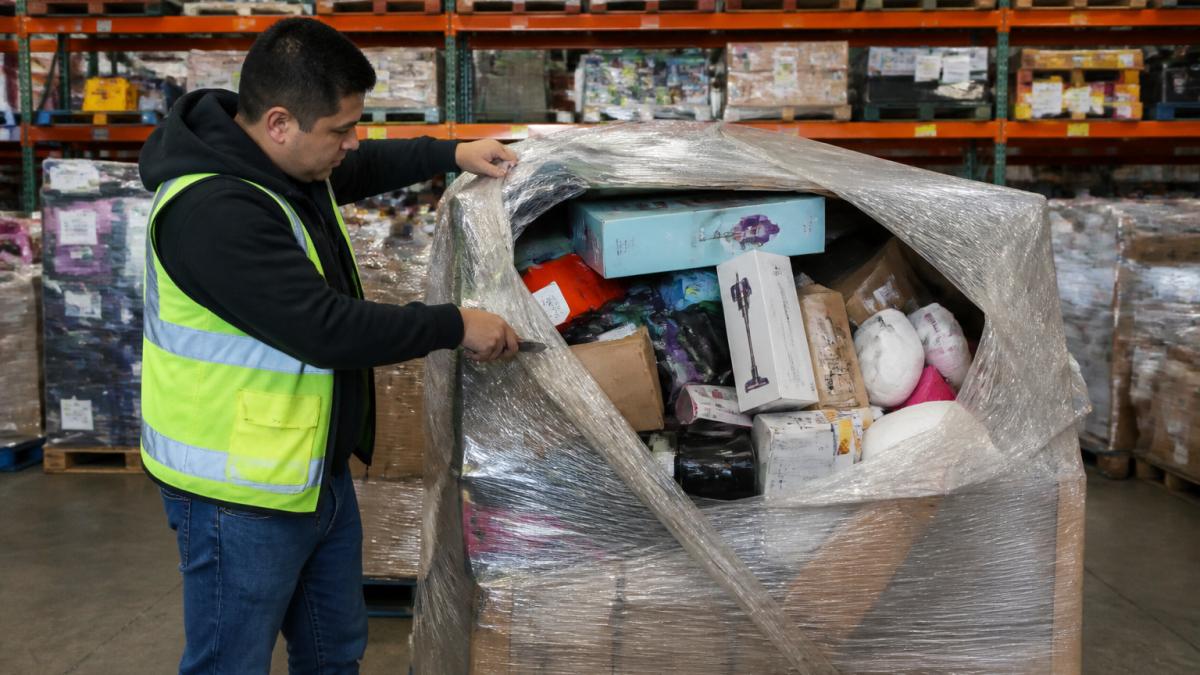
The quality of your supplier decides the quality of your store. A pallet with a clean manifest and honest grading saves hours of sorting; a bad pallet buries your profit in trash.
For consistent volume, daily online auctions and regularly refreshed warehouse inventory matter more than a one-time bargain. At Quicklotz, we run daily online auctions starting at $5 and ship worldwide from strategically located warehouses.
Startup Capital, Warehouse Space, and Location Selection
Most new bin store operators need working capital for three things: the first inventory buy, the space to hold and sort it, and the retail lease. The inventory buy is usually the largest line, and the one you can control.
A Realistic Startup Budget
A common pattern is a 2,000-4,000 sq ft unit combining a small retail floor with a back sorting area. Here is an itemized budget framework to fill in with local numbers, treat the ranges as planning placeholders, not quotes.
| Line Item | Typical Range | Notes |
|---|---|---|
| First inventory buy | $8,000-$25,000 | Start with 2-4 truckloads or 10-20 pallets |
| Retail/warehouse lease | $1,500-$5,000/mo | First + last + deposit due at signing |
| Leasehold improvements | $2,000-$10,000 | Bins, shelving, signage, lighting, POS |
| Bins and display fixtures | $1,500-$6,000 | Heavy-duty bins, rolling carts, tables |
| POS and software | $200-$800 | Cash drawer, scanner, basic inventory app |
| Business formation and permits | $300-$1,500 | Entity, license, sales tax permit |
| Insurance (first year) | $1,200-$4,000 | General liability + commercial property |
| Freight and logistics | $500-$3,000 | Depends on distance and load size |
| Staffing (first 90 days) | $3,000-$10,000 | Part-time sorters and floor help |
| Marketing launch | $500-$2,500 | Signage, local ads, grand opening |
| Cash reserve | $5,000-$15,000 | Covers 2-3 months of fixed costs |
Keep at least 20-30% of startup capital in reserve. The first inventory buy rarely sells through as fast as a new operator expects, and the reserve keeps the lights on while you learn your store's real sell-through rate.
Break-Even Math You Can Actually Use
Break-even depends on three numbers: fixed monthly costs, gross margin per dollar of inventory sold, and sell-through rate. The formula:
Break-even monthly sales = Fixed monthly costs ÷ Gross margin percentage
If fixed costs (rent, insurance, utilities, base labor) are $6,000/month and blended gross margin is 55%, you need roughly $10,900 in monthly sales to break even. At a $22 average transaction, that is about 495 transactions per month, 16-17 per day.
A bin store often needs 3-6 months of operating history before sell-through and margin stabilize enough for the break-even number to be reliable. Plan your reserve accordingly.
Warehouse or Retail Space Requirements
Space splits into two jobs: a back area to receive, inspect, and sort pallets, and a front area to display bins. A modest store can run both in one unit if receiving traffic stays away from shoppers.
Allocate 30-40% of square footage to receiving and sorting and 60-70% to the retail floor. Without a separate receiving door, schedule deliveries before opening hours so pallets never cross the sales floor.
Location Selection: What Actually Matters
For location, prioritize cheap rent and easy parking over foot traffic. Bin store customers drive to you for the prices, not because they were passing by, a visible unit on a secondary road with parking often beats an expensive spot in a busy strip.
Concrete criteria to evaluate a site:
- Loading access: Can a box truck or 53-foot trailer reach your door? If not, you will pay extra for liftgate delivery or a smaller truck.
- Parking ratio: Aim for at least 3-4 spaces per 1,000 sq ft of retail floor. Bin shoppers often arrive in groups and stay 30-60 minutes.
- Visibility and signage: A pylon sign or clear storefront signage on a road with steady traffic beats a hidden unit in a busy center.
Building a Bin Store Business Plan That Actually Works
A bin store business plan is a one-page operating model, not a 40-page document.
The numbers that matter are inventory turnover, sell-through rate, and gross margin.
Write your plan around a conservative sell-through assumption: plan for the worst case and still break even, and the upside takes care of itself.
U.S. Small Business Administration guidance on writing a business plan
Pricing, Price-Drop Schedules, and Bin Store Profit Margins
Bin store pricing runs on a fixed discount schedule. A common approach assigns each day of the week a price, starting high on restock day and dropping to a flat low price before the next truck arrives, the schedule does the selling for you.
How to Set Your Opening Price
Anchor your opening price to cost of goods, not retail. A simple starting formula:
Opening price = (Cost per sellable item) ÷ (Target sell-through percentage) ÷ (1 − Target gross margin)
If your average cost per sellable item is $2.50, you expect 70% sell-through, and you want a 55% gross margin, your opening price should be roughly $7.90.
Most operators set opening prices between $7 and $12 for general merchandise, with higher tiers for electronics, tools, and name-brand apparel. The exact number matters less than recalculating it every time your cost per sellable item changes.
A Weekly Price-Drop Schedule You Can Adapt
Here is a simple weekly price-drop schedule you can adapt:
- Day 1 (restock day): $8, highest price, newest merchandise
- Day 2: $6, moderate drop
- Day 3: $5, mid-week price
The goal is to empty the bins before the next delivery. Leftover stock is dead capital.
Bin Store Profit Margins: The Math That Matters
Bin store profit margins depend entirely on your cost of goods.
A worked example using a $1,000 pallet:
- Cost of pallet: $1,000 (including freight)
- Sellable units after sorting: 200 (the rest is salvage or trash)
- Cost per sellable unit: $5.00
That 23% is thin. The lever is sell-through. If only 150 units sell and 50 go to salvage at $0.50 each, revenue drops to $1,000 and the pallet breaks even.
The lesson: your margin is decided when you buy, not when you sell. A $1,200 pallet with a clean manifest and honest grading can outperform a $900 pallet with 30% unsellable stock.
Handling Shrink, Salvage, and Unsellable Goods
Every pallet produces three streams: sellable, salvage, and trash. Plan for all three.
- Sellable: goes to the bins at your opening price.
- Salvage: items that are damaged, incomplete, or too niche for your customer. Sell these in bulk to a local salvage buyer, at a flea market, or on an online marketplace. Even $0.25-$0.50 per item recovers cost.
- Trash: unsellable items. Budget for disposal, dumpster fees or a hauling service. This is a real cost that many new operators forget.
A common benchmark is 60-75% sellable, 15-25% salvage, and 5-15% trash. If your supplier consistently delivers below 60% sellable, that supplier is costing you money regardless of the pallet price.
Benchmarks to Track Weekly
- Gross margin: 40-60% is a healthy target for a bin store; below 30% means your cost of goods or your pricing is off.
- Sell-through rate: 70-85% of sellable units should move before the final markdown day.
- Average transaction value: $15-$30 per customer is typical; track it to spot pricing problems early.
U.S. Small Business Administration guidance on pricing and break-even analysis
Permits, Insurance, and Legal Setup for Your Store
Legal setup starts with a registered business entity, a local business license, and any sales tax permit your jurisdiction requires.
Insurance is not optional for a retail floor open to the public. General liability protects you if a shopper is injured, and commercial property covers inventory and fixtures.
Keep your supplier invoices and manifests on file. They document the chain of custody for the merchandise you resell, which matters for both tax records and any product-related dispute.
IRS guidance on business taxes and recordkeeping
Daily Operations, Staffing, and Supplier Due Diligence
Daily operations follow a repeatable loop: receive, inspect, sort, price, display, sell, and clear.
Staffing can start lean. One person can receive and sort while another runs the floor. As volume grows, add sorters first, because sorting is the bottleneck that slows everything downstream.
Supplier due diligence separates experienced operators. Ask for a manifest, how merchandise is graded, and what happens when a load underperforms.
Conclusion: Your Launch Timeline and Next Steps
Starting a bin store business comes down to buying well, pricing on a schedule, and turning stock fast. The operators who last tend to treat sourcing as the core skill and keep cost of goods low enough to survive slow weeks.
That is where Quicklotz fits. With 15+ years in reverse logistics, daily online auctions starting at $5, worldwide shipping, and merchandise available at 60-90% off, we give bin store operators a dependable supply of liquidation pallets and truckloads.
Frequently Asked Questions
How much capital do you need to start a bin store?
Startup capital for a bin store typically covers first inventory, lease deposit, shelving, bins, signage, and working capital. A small 1,500 to 2,500 sq ft store can launch for a modest five-figure sum if you buy liquidation pallets gradually rather than filling the store at once. Budget separately for freight, since shipping pallets adds up fast. Keep three months of lease and payroll in reserve so a slow first month does not force you to dump inventory at a loss.
Where do bin stores get their inventory?
Most bin stores buy liquidation pallets, truckloads, and bulk lots made up of customer returns, overstock, and surplus merchandise from retailers and reverse logistics companies. You can source through online auctions, direct supplier relationships, or regional liquidators. Always request a manifest and inspect a sample before committing to volume. Reliable suppliers grade merchandise and disclose unsellable goods rates, which helps you protect your bin store profit margins from the start.
How big should a bin store be?
A practical starting size is 1,500 to 3,000 sq ft of retail floor, plus a back room for sorting, inspection, and restocking. You need enough open floor for bins and clear aisles for local shoppers to move through. A larger space raises lease costs and inventory requirements, so match size to your expected sell-through rate. Many operators start smaller, prove the pricing model, then expand into a second unit or bigger warehouse space.
Do bin stores make good money?
Bin stores can be profitable because merchandise is bought at a deep discount and sold fast through a price-drop schedule. Gross margin depends on what you pay per pallet, freight costs, and how quickly inventory turns. Stores that track sales data, cut unsellable goods early, and restock only proven categories tend to hit healthier profit margins. Diversifying into online marketplaces like eBay alongside in-store sales also smooths cash flow when foot traffic dips.
What are the biggest risks when opening a bin store?
The main risks are inventory quality, cash flow, and lease commitments. A pallet that arrives with more damaged or unsellable goods than expected erodes your margin fast. Freight costs and slow sell-through can tie up working capital. Signing a long lease before you understand local demand adds pressure. Mitigate by starting with smaller pallet loads, verifying suppliers, negotiating flexible lease terms, and keeping a cash reserve for restocking.
How do you price items in a bin store model?
Bin stores use a fixed-price day or price-drop schedule. Each day of the week has a set price, and items that do not sell move to a lower price the next day. This drives urgency and fast inventory turnover. Start prices high enough to recover cost plus freight, then drop them so nothing sits longer than a week. Track sell-through rate by category so you know which items to buy more of and which to stop ordering.