 how-to
How to Buy Customer Return Pallets Locally
Table of Contents
- Understanding Customer Return Pallets and Local Sourcing
- Finding Local Liquidation Warehouses in Your Area
- Step 1: Research and Verify Local Suppliers
- Step 2: How to Evaluate a Liquidation Pallet
- Step 3: Understanding Liquidation Pallet Shipping and Pickup
- Step 4: Negotiating Terms and Making Your First Purchase
- Step 5: Building a Sustainable Resale Strategy
- Common Mistakes to Avoid When Buying Locally
- Frequently Asked Questions
Last Updated: October 18, 2026
Understanding Customer Return Pallets and Local Sourcing
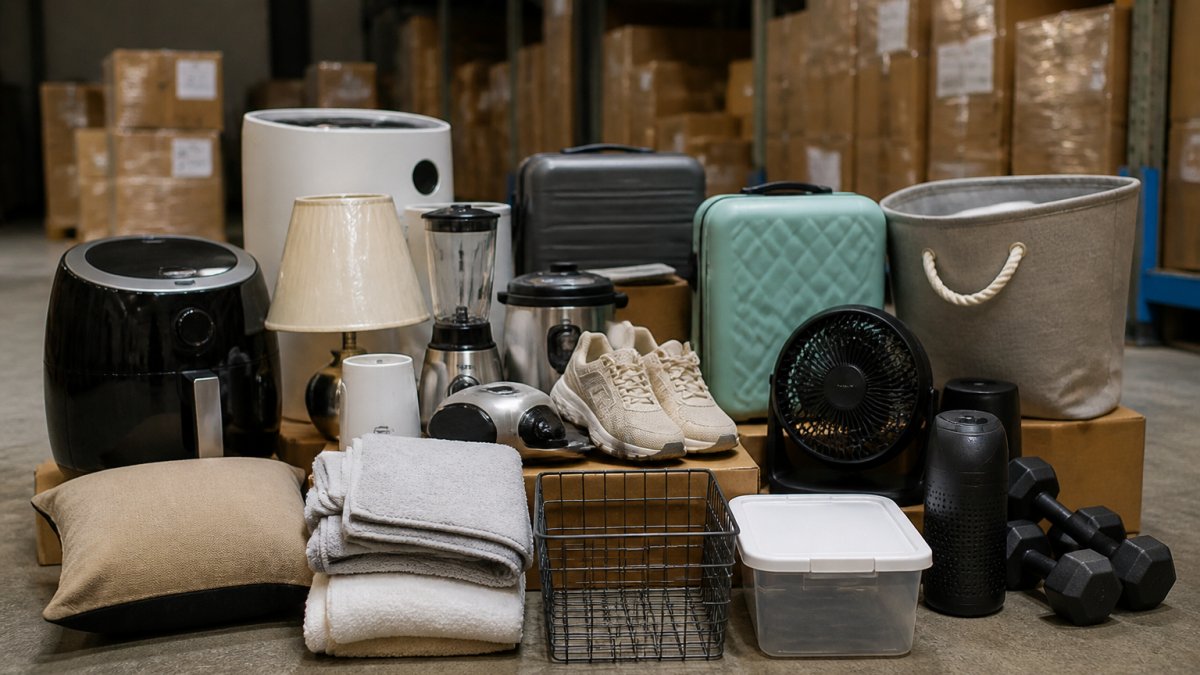
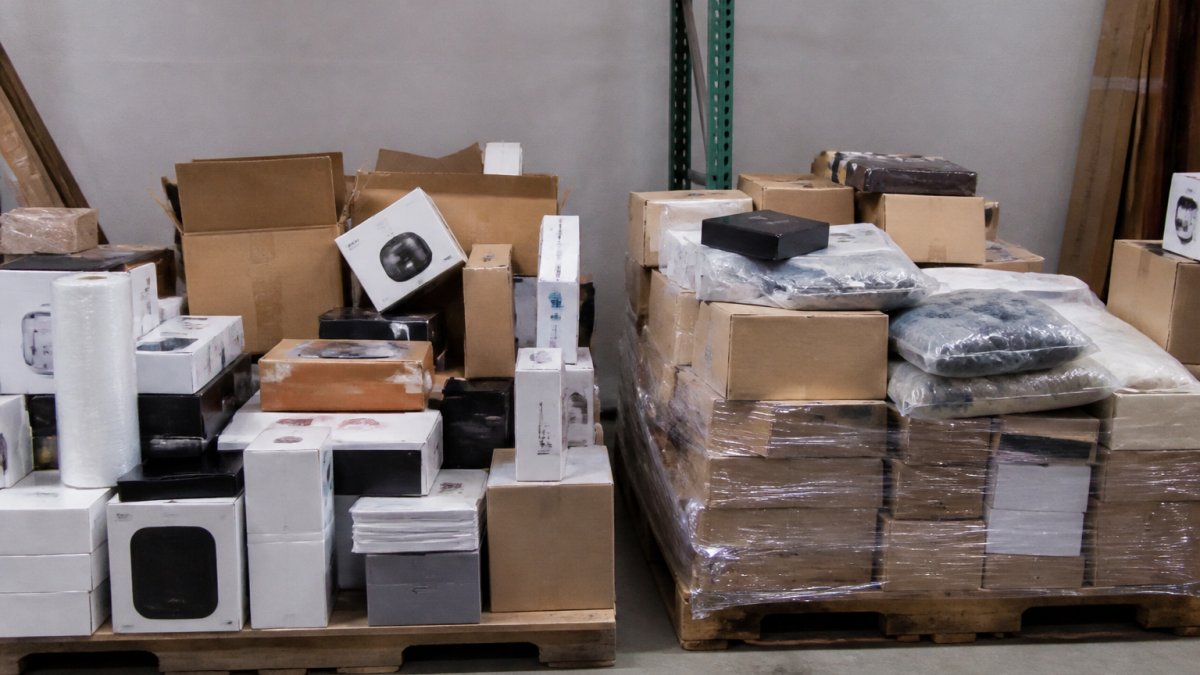
Customer return pallets locally are bundles of merchandise retailers and e-commerce companies send to liquidation warehouses instead of restocking, ranging from unopened products to items with minor damage.
E-commerce returns are climbing fast. According to B-Stock's liquidation research, the return rate was 17.6% in 2023 and is expected to reach 19% in 2026.
Most resellers make two mistakes: buying sight-unseen from distant suppliers and getting burned by condition issues, or ignoring local options and paying premium freight.
Those who succeed locally follow a repeatable process: research suppliers, verify credentials, inspect in person, negotiate terms, and scale gradually.
Finding Local Liquidation Warehouses in Your Area
Local liquidation warehouses aren't advertised like retail stores, and many lack public websites.
- Search "[Your City] liquidation warehouse" or "[Your City] pallet liquidators"
- Check Google Maps for "liquidation" or "wholesale merchandise"
- Look for auction houses and discount retailers that source from liquidators
- Ask local resellers on eBay or Amazon forums where they buy
Some liquidation warehouses advertise walk-in inspection. Suncoast Liquidators in Tampa Bay offers in-person inspection of return pallets at their physical location. This model is becoming more common as suppliers recognize that buyers want to verify merchandise before committing.
When you find a potential supplier, call and ask:
- Do you accept walk-in inspections?
- What days and hours are you open?
- Do you sell single pallets or minimum quantities?
- What payment methods do you accept?
Local warehouses vary widely: some specialize in customer returns, others mix returns with overstock, closeouts, and salvage. Ask specifically about liquidation pallet sourcing if returns are your target.
Step 1: Research and Verify Local Suppliers
Before you visit any warehouse, verify the supplier is legitimate, scams exist in this space.
Check supplier credentials and scam red flags
Search the company name plus "scam" or "complaints," check the Better Business Bureau, and look at how long they've been in business.
Ask for references. Legitimate suppliers can name other resellers they've worked with; call one or two and ask whether they got what they paid for and whether terms were honored.
Watch for red flags. According to GoAura's 2026 liquidation guide, scammers often pressure you to pay before inspection, refuse to provide detailed manifests, or quote prices that seem too good to be true.
Ask about their sourcing: do they work directly with retailers or through brokers? Direct-from-retailer suppliers tend to have more consistent quality and can explain exactly what merchandise they handle.
Confirm physical location and inspection access
Verify the warehouse address on Google Maps, does it exist, and are there reviews or photos? Call to confirm they're still operating there; liquidation businesses sometimes move or close.
Ask about inspection policies: can you open boxes, examine condition, and take photos? Transparent suppliers welcome inspection because quality inventory sells itself.
Confirm payment and pickup logistics before you visit: accepted payment methods, whether pickup must be scheduled, and any loading fees. These details affect your total cost.
Step 2: How to Evaluate a Liquidation Pallet
Once you've scheduled an inspection, you need to know what you're looking at. A pallet can be worth $500 or worthless depending on condition, category mix, and salability.
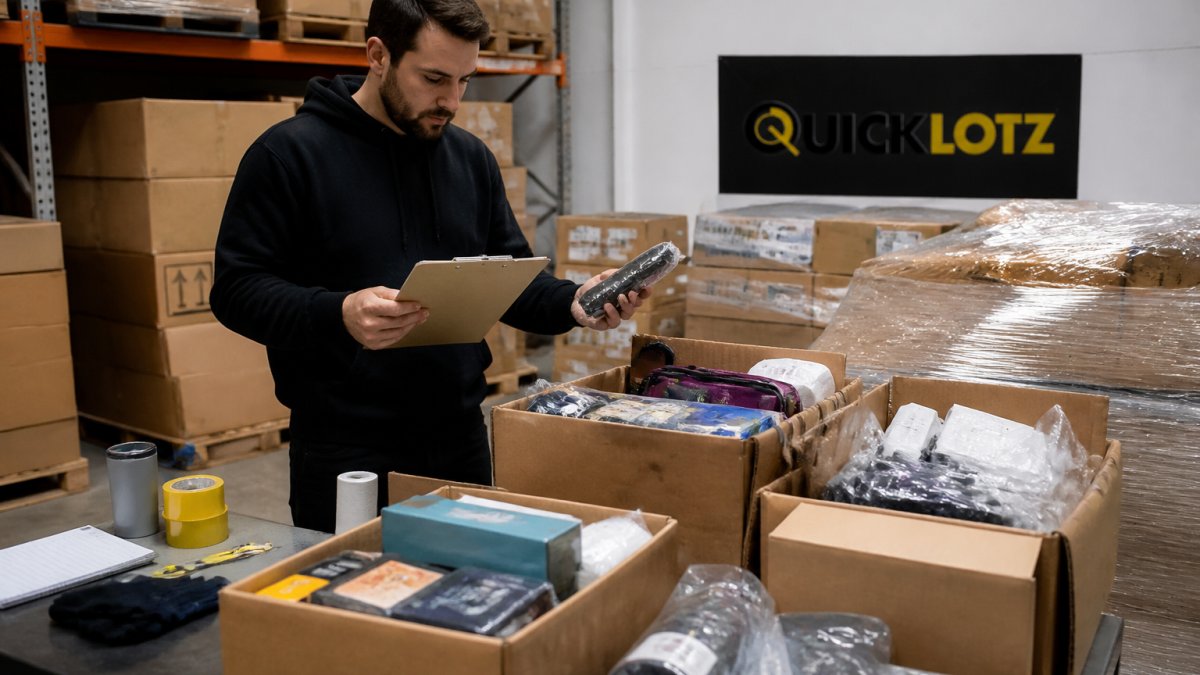
Reading and verifying the liquidation pallet manifest
Every legitimate pallet comes with a manifest, a detailed list of what's supposed to be inside. Read it carefully before you open anything.
The manifest shows:
- Item counts by category (electronics, apparel, home goods, etc.)
- Condition grades (new, like-new, good, fair)
- Retail value estimates
- Any known damage or defects
Compare the manifest to what you see. Open boxes at random, count items, and check condition grades.
Ask about unmanifested pallets. These lack detailed item lists, so you're buying blind; prices are lower to reflect the uncertainty. Only consider them if you're experienced enough to spot value and accept the risk.
Assessing condition grades and product categories
Condition grades matter for resale value. Here's what they typically mean:
- New: Factory sealed, never opened
- Like-New: Opened but unused, minimal packaging wear
- Good: Used but fully functional, minor cosmetic wear
- Fair: Used with visible wear, may have minor defects
Electronics in "good" condition often resell well; apparel in "fair" condition might not. Know your market before you buy.
Look at the category mix. If you resell electronics, a pallet of 80% home goods is low-value even if cheap, you'll struggle to sell outside your expertise.
Check for hazardous items. Liquidation pallets sometimes contain recalled products or items that can't be legally resold. Ask the supplier if anything is recalled or restricted.
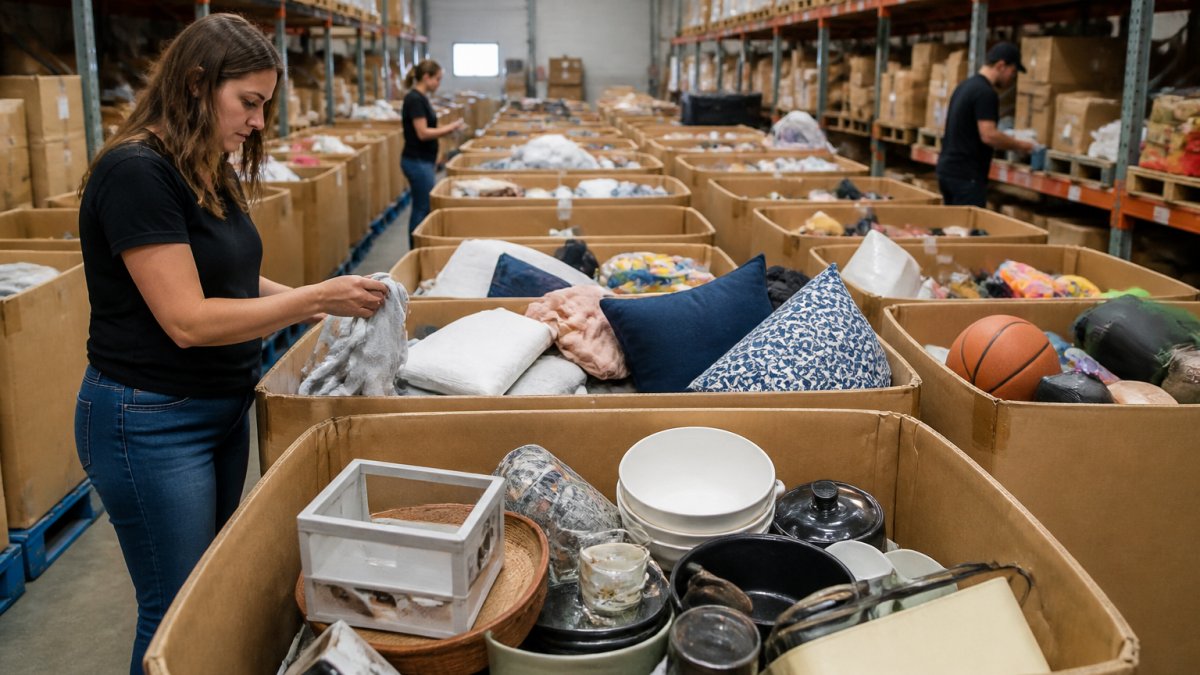
In-person inspection and damage assessment
Look for patterns. If three boxes each have 20% damaged items, expect that ratio across the pallet.
Test electronics if possible, don't just assume they function because the manifest says "good."
Photograph any major damage or discrepancies, if you dispute condition later, photos prove what you received.
Ask about return policies. Can you return the pallet if it doesn't match the manifest? What's the process?
Step 3: Understanding Liquidation Pallet Shipping and Pickup
After you've inspected and decided to buy, you need to get the pallet to your location. This is where local sourcing saves money. Shipping costs can wipe out profit margins on tight-margin inventory.
Local warehouse pickup versus freight delivery
If the warehouse is local, pickup is best: load the pallet onto your truck or trailer and drive it home. Cost is minimal, control is complete, and you see it loaded so nothing is damaged in transit.
Some suppliers offer local delivery for $50-150 depending on distance, useful if you lack a truck or trailer. Confirm the fee before you commit.
If the warehouse is outside your region, you'll need freight shipping. According to Discount Wholesalers' 2026 pricing guide, liquidation pallets can start at $400, but freight to ship a pallet across the country can add $300-800 depending on distance and weight.
Local sourcing eliminates or minimizes shipping. That's the real advantage.
Calculating total landed costs
Don't just look at the pallet price. Calculate total landed cost:
- Pallet purchase price
- Pickup or delivery fee
- Loading or handling fees
- Fuel or truck rental
- Your time
Example: You find a pallet priced at $500. Local pickup is free. You drive 30 minutes each way, using $10 in gas. Your time is worth $20/hour, so 1 hour of driving is $20.
Now compare that to buying from a distant supplier at $450 with $400 freight. Your landed cost is $850. The local pallet is cheaper even though the sticker price is higher.
Track this on every purchase to see which suppliers and categories offer the best real value.
Step 4: Negotiating Terms and Making Your First Purchase
Once you've found a pallet you want, it's time to negotiate. Local suppliers often have more flexibility than online marketplaces because they're dealing with you face-to-face.
Minimum orders and payment terms
Ask about minimum order quantities. Some suppliers require 2-3 pallets at a time; others sell singles. If you're starting out, single pallets let you test categories and suppliers before committing larger capital.
Negotiate payment terms: cash on pickup, upfront payment, or net-30 for repeat buyers. Flexible terms help cash flow, especially early on.
Ask about volume discounts. If you commit to buying 2 pallets per month, can they reduce the per-pallet price? Most wholesalers reward consistent buyers.
Return policies and recourse options
Get the return policy in writing. What happens if items don't match the manifest? How long do you have to report discrepancies? What's the refund or credit process?
Legitimate suppliers stand behind their inventory. If the manifest says 100 units and you receive 85, they should credit you the difference.
Ask what happens if you discover defects or damage after you leave. Can you contact them? Will they resolve it?
Step 5: Building a Sustainable Resale Strategy
Your first pallet is a test. Your goal is to learn what sells, what doesn't, and where your profit actually comes from. Use that data to scale.
Tracking profit margins and inventory turnover
After you sell everything from your first pallet, do the math. Calculate your gross profit: total revenue minus the pallet cost.
Example: You buy a pallet for $500 landed cost. You sell everything for $1,200. Gross profit is $700. Your margin is 140%.
That's healthy. But some pallets will do better, some worse. Track every pallet.
Also track how fast inventory moves. If a pallet sells in 2 weeks, that's good turnover.
Scaling from single pallets to regular orders
Once you've proven the model works, scale gradually. Buy 2 pallets per month instead of 1. Test different suppliers.
Build a relationship with your best local suppliers. Become a regular customer. They'll prioritize you for quality pallets. They may offer better pricing.
As you buy more, negotiate better terms. Ask for volume discounts. Ask for net-30 payment terms so you can sell inventory before paying.
Document everything. Keep records of pallet purchases, sales, margins, and supplier performance.
Common Mistakes to Avoid When Buying Locally
Experienced resellers have learned what doesn't work. Avoid these pitfalls.
Buying without inspection. Never commit to a pallet you haven't seen.
Ignoring the manifest. Read it carefully. Verify counts. Check condition grades.
Skipping the scam checks. Verify the supplier is legitimate before you visit.
Buying too much too fast. Start with single pallets. Learn the market.
Buying customer return pallets locally puts you in control. You see what you're buying.
Frequently Asked Questions
How do I verify that a local liquidation pallet seller is legitimate?
Check for physical warehouse location, business registration, and online reviews from other buyers. Request references from past customers and ask about their return policy. Verify they offer in-person inspection before purchase. Legitimate sellers welcome warehouse visits and provide detailed manifests. Avoid sellers who pressure you to buy unseen or demand payment before inspection. Cross-check their business registration with state records and confirm they've been operating for at least 2-3 years.
What should I look for in a liquidation pallet manifest?
The manifest should list specific product categories, quantities, and condition grades (like A-grade, B-grade, or mixed). It should specify whether items are new, open-box, or returned merchandise. Look for detailed descriptions rather than vague entries like 'assorted merchandise.' Verify that the manifest matches the actual pallet contents during inspection. Check for any notation about damaged goods or missing items. A reliable manifest is your proof of what you're purchasing and critical for calculating resale value and profit margins.
Can I inspect a customer return pallet before purchasing it locally?
Yes, and you should always request in-person inspection. Reputable local liquidation warehouses offer walk-in inspection and allow you to open boxes and examine products before committing to purchase. This is one of the key advantages of buying locally rather than online. Inspect for damage, verify condition grades match the manifest, and check that product categories align with your resale channels. If a seller refuses inspection, find another supplier. Many local liquidation warehouses in major cities specifically advertise inspection access as a service.
How much does it cost to transport a pallet after buying it locally?
Costs depend on distance, pallet weight, and whether you arrange your own freight or use the seller's service. Local pickup from a warehouse typically costs $0-100 if you transport it yourself. Professional freight delivery ranges from $200-800+ depending on distance and pallet specifications. Calculate this into your total landed cost before purchasing. Many resellers negotiate pickup logistics with the warehouse or arrange shared freight with other buyers to reduce per-pallet costs. Always get a shipping quote before finalizing your purchase decision.